
Willamette Valley Vineyards: The Oregon Original, Rooted in Community
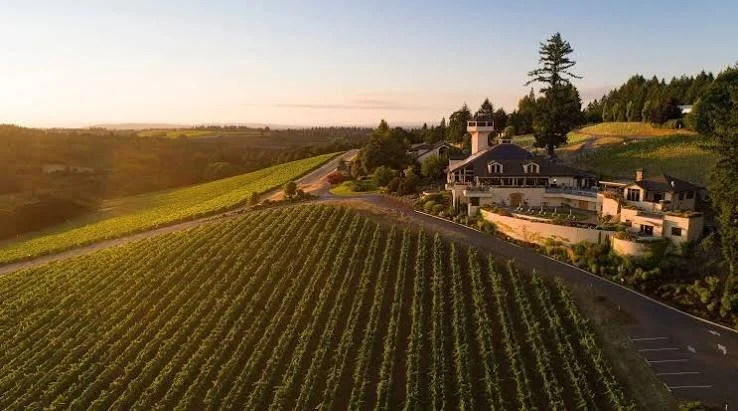
Golden hour at Willamette Valley Winery.
A Pioneer in the Valley
Long before Oregon became known as one of America’s great wine regions, there were a handful of visionaries who believed its cool climate, rich soils and rugged beauty could produce truly exceptional wine. Willamette Valley Vineyards was one of them.
Founded in 1983 by Oregon native Jim Bernau, WVV was built on a belief that Oregon could produce world-class wine while remaining deeply connected to its land and its people. But Jim’s connection to Oregon wine began even earlier, through his father, Fred Bernau, a Roseburg attorney who helped pioneering Oregon winemaker Richard Sommer obtain one of the state’s first winery licenses after Prohibition. Jim grew up around those early Oregon wine stories—and they would ultimately help shape the course of his life.
Jim went on to become a pioneer in his own right, helping establish the foundation for Oregon’s growing wine industry and playing a role in bringing the renowned French Dijon Chardonnay clones to Oregon. In 1983, he planted his first Pinot Noir vines in an overgrown plum orchard in the Salem Hills. That vineyard became Willamette Valley Vineyards.
Rooted in Community
And that pioneering spirit continues today.
As WVV has grown, it has remained intentionally independent and community owned, rather than selling to a large wine conglomerate. More than 27,000 wine enthusiasts have ownership in the winery, making WVV a unique example of a winery whose success is shared by the community that helped build it. We love that story—and it feels especially fitting for Wino Bottle Club, where discovering great wine is just as much about the people and places behind the bottle as it is about what’s inside.
WVV has also played an important role in Oregon’s Pinot Noir story, helping establish the Dijon clones that have become so important to the region’s vineyards. Today, their wines reflect both that history and a willingness to keep exploring what Oregon can do.
A Family Story
And there’s a beautiful family connection in one of the wines we’re featuring this quarter. Père Ami, which translates to “Father Friend,” is named in honor of Jim’s father, Fred. The wine is a tribute to the man whose own belief in Oregon wine helped inspire Jim’s path in the industry. We love when a bottle carries a story like that—where family, place and Oregon wine history all come together.
For this quarter, we’re excited to share six wines that showcase the range of Willamette Valley Vineyards:
The Line Up:
White Pinot Noir — A beautiful reminder that Pinot Noir doesn’t always have to be red. Fresh, bright and wonderfully unexpected, this is a fun expression of one of Oregon’s signature grapes.
Pinot Gris — Crisp, vibrant and quintessentially Oregon, with the freshness and balance we love in a great Willamette Valley white.
Dijon Clone Chardonnay — A wine with a direct connection to Oregon’s pioneering history. Made from Dijon clone Chardonnay, it offers a beautiful combination of brightness, texture and elegance.
Estate Pinot Noir — The heart of the Willamette Valley story. Elegant and expressive, this is the kind of Pinot Noir that shows why Oregon has become so celebrated for the grape.
Père Ami Red Blend — A more personal bottle in the lineup, honoring Jim’s father and the family history that helped inspire his journey into Oregon wine. Rich, approachable and full of character, it’s a wine with a story as memorable as the name.
Métis Red Blend — A bold, expressive red that demonstrates the versatility of Oregon winemaking and WVV’s willingness to venture beyond Pinot Noir.
Still True to Its Roots
What we love most about Willamette Valley Vineyards is that growth hasn’t meant losing the soul of the winery. They have expanded, evolved and become an important name in Oregon wine, but they remain rooted in the same values that started it all: place, quality, innovation, community and a deep respect for the land.
For a winery that helped pioneer Oregon wine, we think that’s a pretty great legacy to continue.